












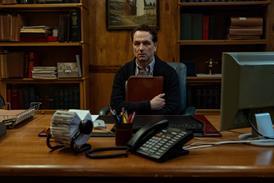


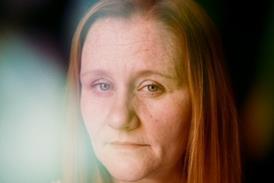
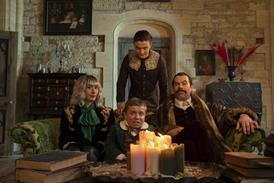

Former Doctors and Emmerdale director Ruth Carney warns the industry will suffer if it allows the pipeline which trained her to continue shrinking
The first time I walked onto the Doctors set, I was frightened. I had come from theatre: I’d trained in Moscow under a director who was taught by Stanislavski, been associate director at Sheffield Theatres and worked with Matthew Warchus in the West End. I knew how to work with actors. What I didn’t know was TV, and I was terrified that everyone would see it.
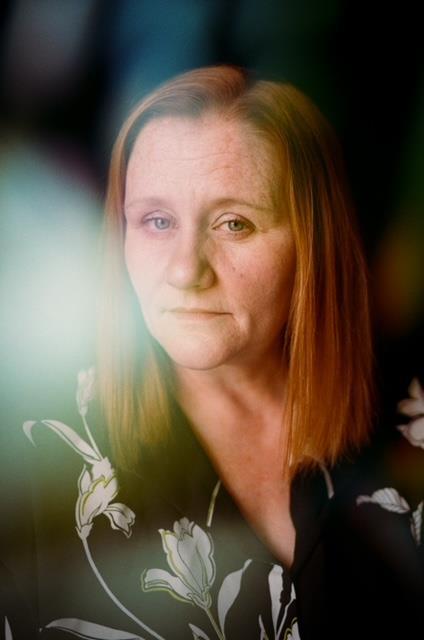
Continuing drama didn’t give me time to be frightened for long. I went on to direct 16 episodes of Doctors and 17 of Emmerdale, and those 32 episodes taught me more about the job than anything that came before: how to work fast and how to get myself out of trouble. In 2025, I was nominated for an RTS award for Shetland – a culmination of the hours that I have put into my craft.
That’s why I think continuing drama is the best director training in Britain, and why I worry about those training opportunities disappearing.
Soaps and continuing dramas run to a schedule that doesn’t stop. You arrive with a block of episodes, several storylines, a cast who know their characters far better than you do, and not much time. Something always goes wrong. An actor is ill, a location falls through, the light goes. You can’t wait for a better day.
You solve it, you shoot, and you move on.
Do that for long enough and it becomes instinct. You learn to see a scene quickly, to know which shots you need and which you can live without, and to earn the trust of actors and crew.
I’m still learning on every job, but those instincts have stayed with me.
Blowing up a caravan on Brassic. Ashley Jensen’s near miss with a car on Shetland. My first feature, Amazing Grace – starring Hannah Walters and Daniel P. Lewis (who also wrote it), which we shot in Liverpool in eleven days, with not many takes.
People ask how you make a feature in eleven days. Part of the answer is that continuing drama taught me to make decisions at speed without losing sight of the performance.
Continuing drama doesn’t just train you. It gets you seen.
Doctors and Emmerdale led to Casualty. Casualty to Death in Paradise, and a 9pm show on BBC1 changed how people saw me. That led, in time, to Shetland. Each job built on the one before, and none of it would have happened without that first block of Doctors.
Schemes matter enormously. The BBC Directors Scheme changed my life, and High-End TV Stepping Up and Directors UK Inspire helped me later on. But a scheme opens a door. What makes a director is the volume of work that follows: episode after episode, on real shows, with real deadlines.
That volume is getting harder to find. Doctors and Holby City have gone and River City, Scotland’s equivalent, has just gone too.
Meanwhile, high-end drama runs to fewer episodes with bigger budgets. Producers understandably want directors who have done it before. So we’ve built a system where you need experience to get the job, and the places where you got that experience are closing.
There’s another reason this matters to me. I grew up in Talke Pits, near Stoke-on-Trent and going to university wasn’t the norm where I lived. Continuing drama was a route in that didn’t depend on who you knew or whether you could afford to make a short film for nothing. When the industry talks about diversity, class still gets left out, and losing this route will make that worse. I’m not sure someone growing up where I did could take the same path today.
This isn’t about continuing drama being a stop on the way to something better. For some it’s where they start, and for others it’s where they stay. Either way, it’s where directors are made.
We also need to stop treating it as a lesser form and talking about “emerging” director – what a term! Most of us have been grafting for years, often on shows the industry doesn’t celebrate. Then one moment arrives and suddenly, we’ve emerged.
If broadcasters and producers want a strong bench of directors for high-end TV and films, we need to protect the places where they learn. That means keeping training slots on the continuing dramas we still have, supporting the schemes that lead into them, and valuing the work those shows do in building the industry’s talent.
I owe a great deal to Doctors and Emmerdale. I’d like the next generation to have the same chance.
- Ruth Carney is lead director on Shetland series 11, and was nominated for Best Director at the RTS Awards 2026 for series 10. Her feature debut, Amazing Grace, is in cinemas from 6 November. Amazing Grace deals with suicide. If you are struggling, Samaritans are available day or night on 116 123.






No comments yet