









As Zandland launches its latest DTC show and subscription scheme, Broadcast talks to the indie’s founder about the opportunities and limits of the digital frontier
Over the past couple of years, video-sharing platforms such as YouTube have been presented as something of a panacea for indies’ woes. If they’re not getting commissions from traditional broadcasters or streamers, they are told, they should simply be directly seeking out viewers among the millions of potential audience members flocking to YouTube.
Among the indies leading the way in forging a path into this new frontier is Zandland, a factual London and Liverpool-based outfit founded in 2017 by filmmaker and journalist Ben Zand.
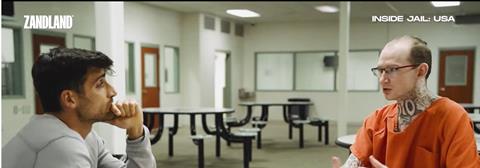
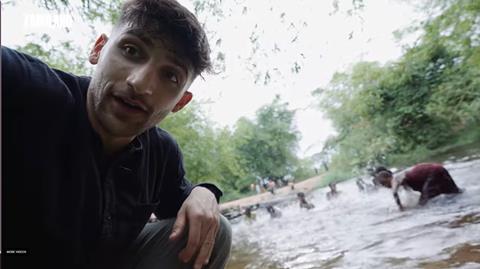
In September last year, the company launched Human, a docuseries entirely funded and produced in house, and dropped on YouTube in monthly episodes. The series looks at the lives of people around the world, seeking to have difficult conversations across divides. Topics covered so far have included Israel and Palestine, nudism, South African racial segregationists, porn addiction and online sex work.
So far, this content has clocked up more than 24m viewers and more than 130,000 hours of watch time.
For many indies eyeing YouTube and wondering whether to take the plunge, there is the question of monetising such content – advertising revenue can go some of the way, but can it really be a sustainable income steam for a modern production company?
Zand certainly thinks so. Zandland has launched a YouTube membership scheme in a bid to generate an additional revenue stream. For £4.99 a month, subscribers get early access to videos, exclusive behind-the-scenes content and access to members-only livestreams.
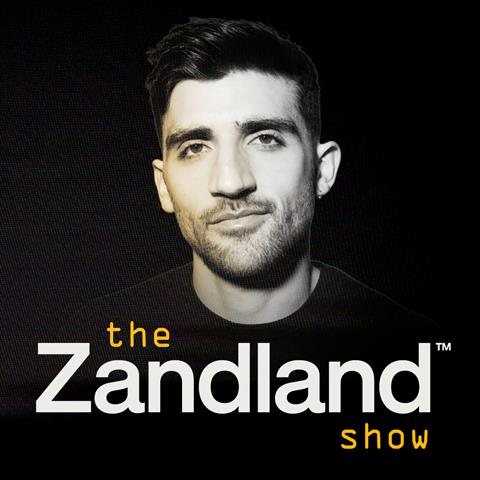
Alongside this, the company has unveiled a new weekly series, The Zandland Show, which will run on YouTube and Spotify and complement the documentary content. A slate of in-person events is also being rolled out.
The membership offer, Zand tells Broadcast in an exclusive interview, is “an evolving proposition”.
“It’s been a fascinating experience trying to kind of figure out what the proposition is to the audience,” he says. “And at the moment, it’s stuff that YouTube enables to allow people to feel as though they’re integrated into the content.
“[The current offering] is definitely not the end of that journey, because we want to integrate live events into memberships, allowing people to get involved in the shows in a way that they wouldn’t otherwise be able to.”
While the Human documentary episodes take a traditional docs format – Zand flies across the world to talk to people in person – The Zandland Show has much more in common with YouTube’s standard creator content and visualised podcasts (albeit with TV-level production values).
In most of the episodes posted so far, Zand talks into a microphone about a topic at length, interspersing his address to the audience with clips from the docs to illustrate his points. The latest episode, however, features the show’s first interview, with Kaouther Ben Hania, director of the Oscar-nominated film The Voice of Hind Rajab.
“It’s about making sure the audience understands that everything we do is access-driven, that it costs a lot of money to go around the world and that we fund a big part of that ourselves”
The aim, Zand says, is to create around Zandland a sense of “community for people who want to be part of its journalistic enterprise”.
“It’s not unlike what the New York Times does with The Daily podcast, where you hear them talking about how much work they do to get to a story,” he says.
“It’s about making sure the audience understands that everything we do is access-driven, that it costs a lot of money to go around the world and that we fund a big part of that ourselves.”
The show, he hopes, will drive engagement with Zandland’s content and membership sign-ups. Zand’s not willing to share the target number of members he has in mind for the first year of the scheme, but says his hope is that eventually memberships could account for as much as 60% of Zandland’s revenue – although again, the offering may well look very different from its current incarnation by that point.
Not the only answer
Zand is clear that while direct-to-consumer production is set to be a key income generator for the company, he’s not turning his back on traditional broadcasting – nor does he think it will be entirely replaced.
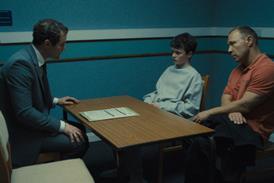
Recent projects include the 1 x 60 minute doc Breaking Ranks: Inside Israel’s War for ITV and the feature doc Coming Out Amish, distributed by Hat Trick International.
“As it currently stands, the business is doing very well when it comes to traditional commissions,” he says, “We’re already seeing quite a lot of branded partnerships off the back of the original content we’re doing, so it’s making its money back and more.”
Commissioners too, have been in touch about the YouTube docs, asking about access or whether it would be possible to do something in the same subject area.
“It works as a kind of a PR tool and virtuous circle,” Zand says. “The beauty of just making stuff is that you get access to people as you go, and the stuff that we put on our YouTube is feasibly content that we could have in a very similar form on Netflix, so there is a pipeline potential here.”
And, he says, the ability to simply make content without waiting for a greenlight offers a psychological and financial pick-me-up amid development limbo.
“I don’t think YouTube is the solution to all of the problems,” he says. “Finding a way to make your own content and build your own audience is a solution to a specific problem – that problem being that historically development costs a lot of money and doesn’t always have rewards when you don’t get things commissioned. That can be damaging, big time.”
Direct to consumer content can also help to bypass any sense that only producers from specific circles, with specific relationships or access to certain IP, can score commissions, he continues.
“It does create leverage in a way that hasn’t previously existed. It ticks a lot of boxes in terms of development, but it also gives you some kind of outcome from that development which can theoretically be monetised. It helps push your brand out there to people who otherwise wouldn’t know it, therefore creating relationships with commissioners and brands that you may not otherwise have.”
The current era of TV calls for producers to be more entrepreneurial than they have had to be before, he says: ”The potential suitors for your content are multiple – it could be people, it could be brands, it could be TV channels. I think you just have to be more nuanced now, in terms of thinking about ‘Where can my content live and how can I monetise it?’”
The data that comes through director-to-consumer production – who’s watching what, which subjects engage them most, when they switch off – can also be invaluable in helping to develop new content, he adds.
While Zand has high hope for the subscription model of Zandland, he accepts that it will not be something every indie can turn to or achieve huge financial returns from.
“There is 100% a limit to it, in the same way that there’s a limit to how many mobile phones companies that can exist – there’s obviously the supply and demand of a marketplace,” he says.
“If you’re an average human being, you don’t want to be spending £70 a year on 70 subscriptions with different people – it’s highly confusing, and also you don’t have that much money.”
Ultimately, he says, YouTube may not be the final destination for the industry, but a way-stop en route to somewhere else.
“There’s a huge amount of that journey to go,” he says. “It asks the broader question of ‘what do the streaming platforms and monetisation structures of the future look like?’ I think there’s going to be a whole other set of innovation around exactly that.”
But, he continues, whatever the future looks like, it’s likely to mean more independence for producers. And for now, the best approach is to “look at it as a tapestry of revenue models” that includes channels, brands, distribution, sales and membership.
A background of global mergers
Zand is speaking to Broadcast in the wake of the mega-deal to merge Banijay and All3Media. Banijay global boss Marco Bassetti told Broadcast International that the newly formed super-indie would look to make a major push into DTC, both through putting old IP onto YouTube, and through creating original content.
Zand, perhaps surprisingly, isn’t overly concerned about a global giant looking to move onto the same turf.
“It’s tricky, when you have the overheads of a giant company, to make the economics of digital work,” he says. “I’d also say that we are very much a creator brand, in the sense that I’m at the front of this content right now. And part of the struggle [bigger companies have] is that they don’t know what talent to use and don’t have the relationships to create those partnerships.
“In terms of a threat to us directly, nobody really makes content like we’re making right now on YouTube, and I don’t really think they’re going to because we do it because of a specific set of circumstances, team structure and will.”
Instead, as larger companies eye up the opportunities afforded by YouTube, he predicts there’ll be an abundance of true crime and reality TV focussed YouTube Channels.
“It’s exciting, to be honest – unbelievably complicated to figure out, but that’s just the way it is,” he says. “We’re in a transitional time in the industry and it just means everything needs to be slightly rethought.”






No comments yet