














As more indies explore ad-funded content, Broadcast asks a panel of experts how the industry can unlock the opportunities it offers
As commissioning budgets have grown tighter in recent years, ad-funded programming has become an increasingly attractive proposition. Rather than making a show and selling the advertising around it, the thinking goes, why not create a format with the brand’s message baked in, and bring them (and their budgets) in at an earlier stage?
But for many indies this is new territory and, from the outside, the four-way partnership between production companies, broadcasters, brands and talent can seem opaque. Where do the ideas come from? Who approaches who? What role should talent play? And what’s the best way to ensure that this way of working produces something audiences will actually want to watch?
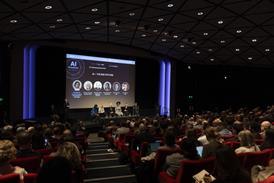
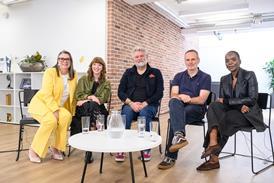
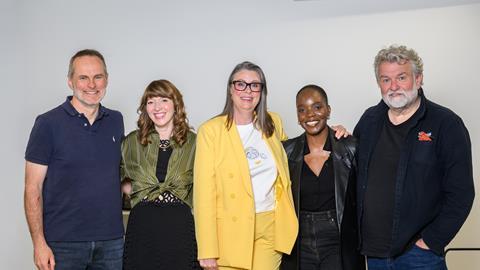
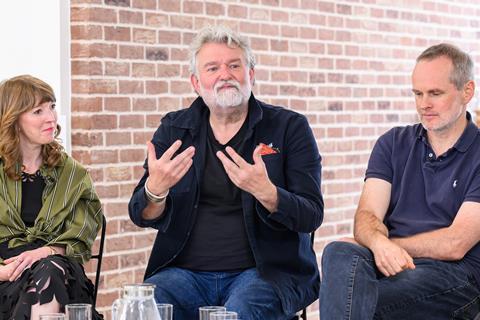
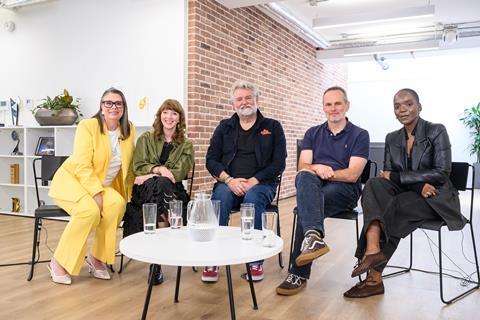
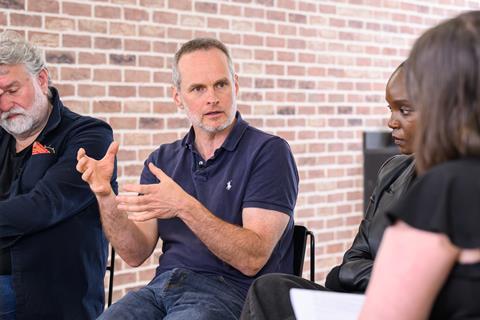
To help answer these questions, Broadcast, in partnership with Aurora Factual, brought together a panel of experts to discuss brand-funded content partnerships from all four perspectives.
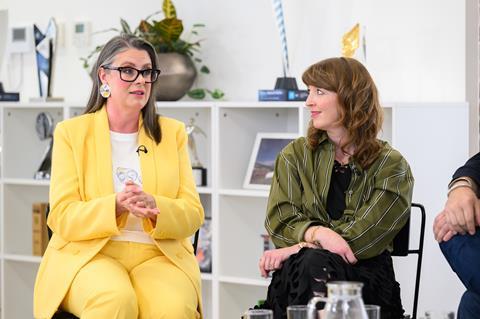
Leanne Clark, assistant commissioner for ITV daytime, points out that shows funded by brands are nothing new. Even before the pandemic, the boom and the current slump, she says “I was finding money to do shows, often through tourist boards for example, and we got to do beautiful travel and cookery shows with great talent that way”.
But she acknowledges the industry has become less squeamish about the idea of AFPs than it might have been 10 years ago.
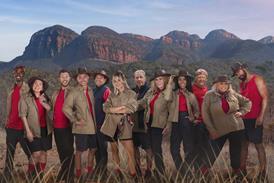
In the past six months, ITV has broadcast Be Your Own Boss, made by True North in partnership with Royal Mail, Sara Davies’ Christmas Craft Off, produced by Twenty Six 03 with Amazon, and Julia Bradbury’s Wonders of the Frozen South, made by Captive Minds with the cruise company HX Expeditions.
Lifestyle shows particularly lend themselves to branded content, Clark says (although she hasn’t given up hope of finding a gameshow format that works). Ultimately for the broadcaster, it’s not just about scoring cheap content, she says, it’s also “bums on seats and ratings” – and a well thought-through idea can achieve just that.
They can also, she says, make for promising returning series – the holy grail as far as indies (and broadcasters) are concerned.
Aurora Factual director of development Sarah Stevenson points out that ad-funded content can also offer indies opportunities to work in the digital space, producing shoulder online content for the main series, depending on the requirements of the brand.
From the brand side, HX Expeditions’ Jim Sayer, himself a former TV executive, says funding such shows allows them to give their audience a much deeper understanding of and connection with the product than is possible through advertising.
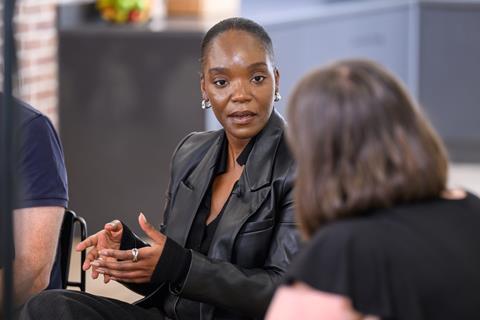
In the case of Wonders of the Frozen South, he says, potential customers will often spend years thinking about “buying the trip of a lifetime”, before committing to spending thousands.
“If you’re buying a car, you can go and test drive it, but you can’t test drive Antarctica,” he says. “A 30-second ad spot has a definite role to play but having 30 or 60 minutes of content gives them an opportunity to experience the place and see themselves in it – that’s a tantalising prospect.”
For talent, it’s often an opportunity to work with brands they’re interested in anyway, says Hairy Biker Si King, who is contributing to the conversation both as an on-screen star and as creative director of his indie Magnetic North.
“It’s about alignment and connection,” he explains. “I have to be invested in a brand partnership, and I either have to use the brand or just really understand the ethos behind it, because it’s an emotional connection?.”
Good Culture commercial director of talent and marketing Blondelle Baima agrees that this is crucial for a successful project. Talent doesn’t need to have a huge social media presence to be a good candidate to front an AFP, she says, but they do need an engaged audience – who will sniff out “when something’s disingenuous”.
For many of her clients brand-funded programmes offer ways to leverage connections they might already have with a brand to operate on a bigger platform, and that she’s seeing smaller brands show more interest in paying for shows.
Baima also suggests talent and their management can play a crucial role in in kicking off the creation of an ad-funded programme, including through generating ideas.
“For people who already have super-engaged audiences and maybe a format on social media, they already have proof of concept,” she says.
As a talent management company, Good Culture sits “in a really good space where we have great relationships with brands, and we know who is investing, because we’re working directly with them our talent, [and] we’re able to pitch things to them”.
Stevenson agrees, adding talent can also help bring in the brand as the last piece of the jigsaw.
“Talent can open doors in ways we can’t… so get them working a bit harder for you,” she urges, suggesting indies include a video message from the talent in the pitch to the brand.
“Me saying ‘Si really wanted to do this’ is very different to Si saying ‘Hey, I’d like to do this’,” she says, pointing to King.
Starting points
Wonders of the Frozen South, Sayer says, started the way many traditionally funded shows do, following a chance conversation with a former TV colleague – but as everyone on the panel agrees, they really can originate from any part of the partnership.
For Clark, the preferred route is for the indie to come with a strong idea, and potentially the talent attached, so that ITV’s BE Studios commercial partnership team can help match them up with the brand.
But, she says, “the bottom line is, idea first”, and she’s open to being approached with projects where the brand is already in place.
“I personally feel it can come from anywhere, and I don’t like to be closed off in that in that way,” she says.
Sayer urges indies who want to pitch directly to a brand to think carefully stressing the importance of having a sense of where and how it will sit within the brand’s identity and strategy.
“Look at as much of a brand’s output as possible, in whatever form, across all channels,” he urges. “Some publish their brand books, and you can understand the DNA.”
Most producers, he accepts, are “very good at reverse-engineering content” to fit a brief, but cautions: “Don’t try to over-position it from a marketing perspective, because it’s unlikely you’ll know how to do that in a way that works for that particular brand – sometimes the brand doesn’t even know how to do that.”
Indies also need to recognise their pitches aren’t simply competing with other shows when they pitch to brands,– they’re up against everything else the company could do with their marketing budget.
All indies can do, he adds, is “bring your own expertise, be really clear about it, and then ask for input and feedback”. This approach is likely to lay the groundwork for positive future collaborations.
Expanding on the spontaneity of AFP, Stevenson points out that most recent Aurora projects “came from different starting points”.
The company has produced The Believers, a four-part documentary about the run up to the 2022 FIFA World Cup to support Coca Cola’s sponsorship of the event, as well as Brooklyn Peltz-Beckham EVO SESSIONS TikDok – a first-of-its-kind TikTok documentary in partnership with Formula E team Jaguar TCS racing, and Inside the Ropes, a behind-the-scenes LIV Golf documentary series with Ian Poulter and Lee Westwood’s Majesticks team.
“The thing they all have in common is that they live or die on trust – every partnership does,” she goes on. “We’re really transparent in communication about what everybody wants out of it –what timeline are we all working to? When will there be money? When won’t there be money? When might it TX?
“If we can have those conversations as early as possible and trust each other when we say what we want - that’s a big part of it for me.”
For brands, both King and Sayer acknowledge, elements of these conversations can be difficult. Companies will likely have metrics in mind they want to hit, both from TX and the wraparound online content. King notes this is “quite sensitive information from a corporate body”, and they may not be willing to share it until the relationship has developed.
Once an idea has been agreed, Clark says, “you’ve got to be quite quick – they’re like buses, and you’ve got to go for it, because otherwise you lose them”.
King agrees. “It’s just about being light of foot,” he says, adding it might not be a bad thing for the often slow-moving world of TV to learn “a different professional language”, and match the pace of the commercial world.
Quality control
Clark is keen to point out that ad-funded shows are still held to high editorial standards, and she has rejected pitches she didn’t feel were strong enough.
“Hand on heart, all the ad-funds I’ve commissioned, I would almost 100% have commissioned them without a brand,” she says. “They go through the same process as every other show, where I go to Katie [Rawcliffe, ITV director of entertainment, reality and daytime] and Kevin [Lygo, director of television] to get them signed off.
“It has to look like a TV show – because it is”.
Stevenson says “holding the editorial line” is a key role for the indie, and ensures the brand trusts producers.
“We need to say = we know what we’re doing and have agreed the story we want to tell,” she says. “Because as soon as it starts feeling like an ad, you’ve lost what we were all here to make in the first place.”
Throughout the roundtable discussion, the conversation repeatedly returns to the ideas of trust, transparency and relationships – and ultimately all panellists agree they are the make-or-break element in producing quality telly that works for everyone.
Brand-funded content may be a lucrative way to get content made and on air, but King warns against viewing corporate partners as simply a cash cow. If an idea doesn’t initially come together, it might well be worth continuing to explore and deepen the relationship.
“I’m not particularly into one-hit wonders,” he says, adding: “The longer the relationship and the more exposure you have to each other, the more opportunities come.
“We’re all in it trying to mould a new way to take the industry forward – because it’s a new world entirely – the old days are gone.”
Stevenson urges anyone who wants to explore the world of brand funded content to simply start having conversations.
“The more occasions we can get where everyone its down together, the faster and easier it is to get stuff off the ground.”.
-
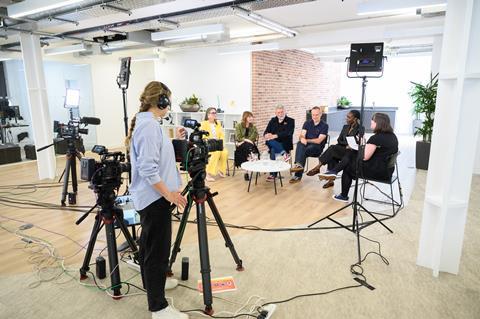
This roundtable discussion was originally streamed live as a webinar with support from Aurora and Timeline. You can watch the full conversation above.






No comments yet